The Atlantic Power: Understanding the “No Swimming” Policy
Bathsheba is a masterclass in raw nature, but it requires a significantly different mindset than the gentle Caribbean waters found on the island’s west coast. While the turquoise hues and dramatic spray are visually inviting, the Atlantic side of Barbados is defined by its unyielding power. A strict “No Swimming” policy is in effect for the open ocean at Bathsheba; the combination of unpredictable North Atlantic swells and heavy undercurrents makes the water lethal for even the most proficient swimmers.
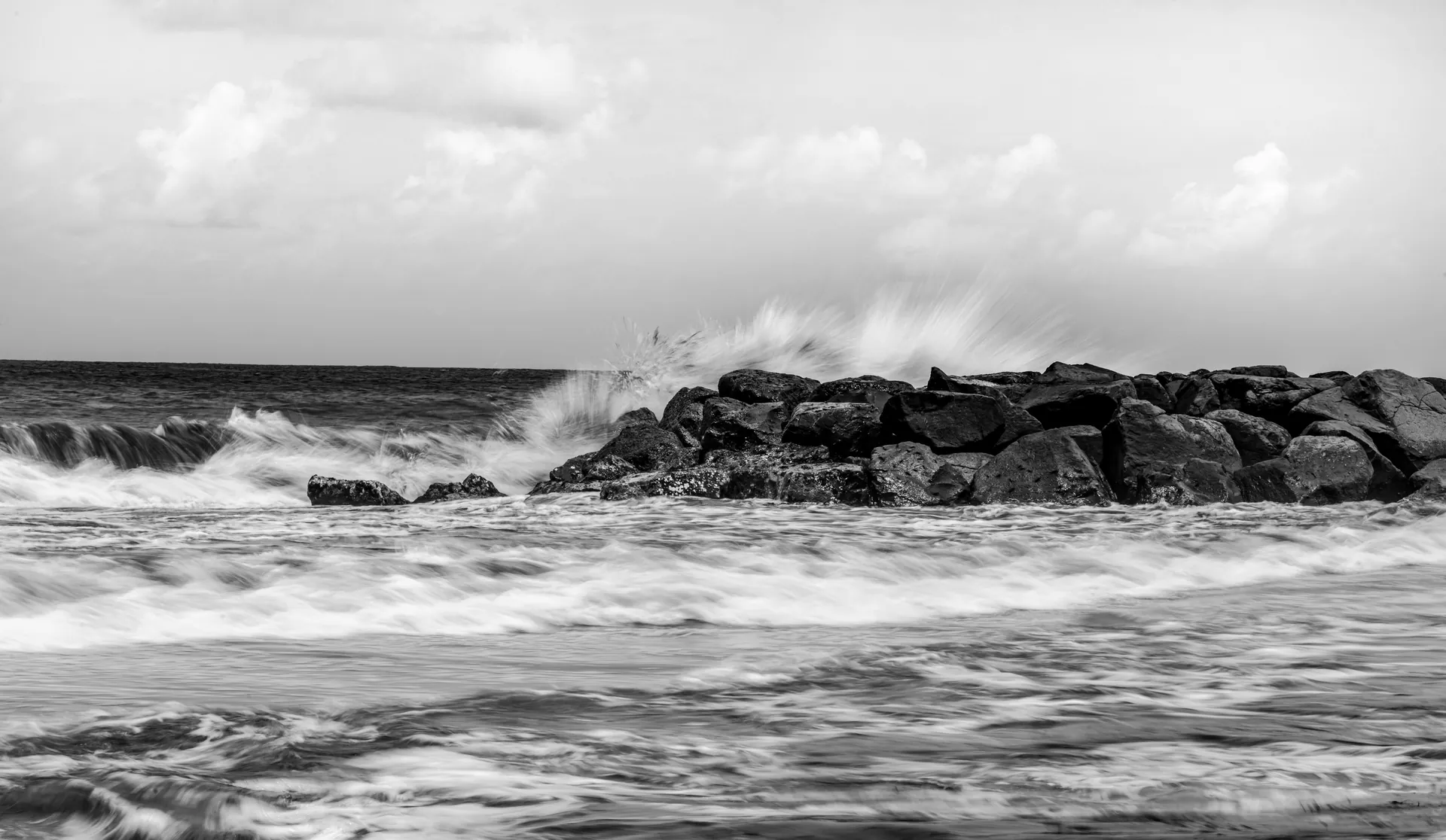
The distinction between “soaking” and “swimming” is critical for your safety. Entry into the open water beyond the reef line is reserved exclusively for expert-level surfers who understand the specific mechanics of the Soup Bowl break. For a technical breakdown of how these waters differ from the platinum coast, visitors should consult our dedicated guide on Atlantic Safety: Understanding Bajan Tides.
“The East Coast does not have ‘calm’ days, only different levels of intensity. The Atlantic undercurrent here is a silent force that commands absolute respect.”
Identifying and Respecting “Flash Rip” Currents
The primary hydrological hazard at Bathsheba is the “flash rip.” Unlike permanent rip currents that may be fixed in position by coastal structures, flash rips are sudden, powerful offshore flows that can manifest without warning. These often occur when a large set of waves breaks, pushing a massive volume of water over the reef that then seeks the path of least resistance back to the open sea.
- Visual Cues: Look for sections of discoloured, sandy water being pulled rapidly away from the shoreline.
- Surface Texture: Identify areas where the wave line appears to “gap” or flatten while waves are breaking heavily on either side.
- Deceptive Calms: Never be fooled by a ten-minute window of flat water between sets; this is often when the outflow of a rip is at its most potent.
Safe Alternatives: Soaking in Inshore Protected Pools
The “Safe Zone” Mechanics
The only safe way to experience the water at Bathsheba is by utilizing the reef-protected limestone pools. These geological basins act as natural buffers, absorbing the momentum of the Atlantic swell before the water reaches the inner shore. At low tide, these pools offer a serene “soaking” experience, often referred to as the “Bathsheba Hot Tubs.”
The Reef “Hug”
To remain safe, you must stay within the immediate “hug” of the inner reef. Never venture toward the outer edges of the rocks where the surge can suddenly lift a person and pull them into the open break. The limestone surfaces are also extremely sharp and can cause severe abrasions if you are caught by a surprise surge.
Marine Hazards: Dealing with the Bajan “Cobbler”
While the water in the pools is crystal clear, the limestone crevices are the preferred habitat for the Sea Urchin, known locally as the “Cobbler.” These organisms are a vital part of the ecosystem but pose a significant risk to barefoot visitors. Their long, brittle, calcium-based spines can easily puncture the skin and break off, leading to painful inflammation and potential infection.
- Footwear: High-grip, thick-soled water shoes are mandatory. Standard flip-flops are insufficient for the jagged, slippery limestone.
- Manual Safety: Do not reach into rock crevices to steady yourself. Cobblers often congregate in the shadows of the Mushroom Rocks.
- First Aid: If stung, the traditional Bajan remedy involves the application of acidic liquids like vinegar or lime juice. The acid helps to dissolve the calcium spines that are too brittle to be pulled out with tweezers. Seeking medical attention at the St. Andrew Outpatients Clinic in nearby Belleplaine is advised for deep punctures.
Bathsheba Park & Visitor Logistics
The National Conservation Commission (NCC) maintains a central facility at Bathsheba Park which serves as the primary hub for logistics. Planning your visit around these facilities ensures a more comfortable experience on this rugged coast.
| Facility / Service | Details & Availability |
|---|---|
| Public Restrooms | Located at Bathsheba Park; maintained until 6:00 PM daily. |
| Freshwater Showers | Outdoor rinse-off stations available near the changing rooms. |
| Lifeguard Station | Staffed by the NCC; they monitor for pool safety and discourage ocean entry. |
| Parking Capacity | Main lot holds ~25 cars; fills by 10:00 AM on weekends and public holidays. |
| Emergency Services | Ambulance response from Bridgetown (40-50 mins); Clinic in Belleplaine (8 mins). |
Soup Bowl Professionalism: Surfing Etiquette
The “Soup Bowl” is not a beginner’s break; it is a high-performance reef break that requires precise timing and significant power. If you are an expert surfer visiting the area, respecting the local “East Coast crew” is paramount. Local etiquette dictates that visitors give priority to the regulars on the best sets. Because the reef is shallow and the wave speeds are high, “dropping in” on another surfer is not just a breach of etiquette—it is a dangerous physical hazard. Beginners are strongly advised to seek calmer waters on the south coast or to stay “on the inside” at nearby Parlours.
Road Access and Navigational Specifics
Reaching Bathsheba requires navigating the steep, winding terrain of the Scotland District. Most visitors arriving from the south or west will descend via Highway 3, which involves 15-degree gradients and several sharp hairpin turns through Horse Hill. If you are prone to motion sickness, the Ermy Bourne Highway (East Coast Road) offers a flatter, more linear approach from the north and is highly recommended. For those using public transport, Route 6 departs regularly from the Fairchild Street Terminal in Bridgetown (fare is $3.50 BBD). For more detailed directions from the airport or cruise port, see our transportation guide.
Packing for the St. Joseph Microclimate
The weather at Bathsheba can differ significantly from the rest of the island. The constant Atlantic breeze can make the temperature feel 3–5 degrees Fahrenheit cooler than the west coast, but the UV exposure is higher due to the reflection off the white foam and salt spray. You should pack high-SPF reef-safe sunscreen and a wind-resistant shell. Passing tropical showers are frequent in the hills of St. Joseph; these are usually brief but can be intense.

A Good Bajan Day – Bestselling Barbados Highlights Tour
⭐ Professional local guide included
🔥 Booked 10 times this week

6- Hour Coastal Tour of Barbados with Drinks, Snacks and Lunch
⭐ Professional local guide included
🔥 Booked 11 times this week

Beautiful Coastal Sightseeing Tour of Barbados
⭐ Professional local guide included
🔥 Booked 12 times this week