
Regional Context: The St. Joseph Hub
Bathsheba Beach and the iconic Soup Bowls serve as the dramatic anchor of Barbados’ windward coast. While the shoreline is defined by rugged Atlantic power and geological anomalies like the Mushroom Rocks, the surrounding St. Joseph parish offers a stark, lush contrast. This region, often referred to as the “Scotland District” due to its hilly terrain and resemblance to the Caledonian highlands, is the only part of the island where the ancient tectonic basement rocks are exposed to the air. It is a landscape of high-elevation vistas and deep, limestone-carved gullies that feel worlds away from the flat, coral-sand beaches of the west coast.
This guide bridges the gap between the salt-sprayed coast and the Scotland District’s tropical interior, where visitors transition from world-class surf breaks to 19th-century botanical wonders.
By moving just a few miles inland, you trade the persistent salt spray of the Atlantic for the humid, floral-scented air of the island’s most famous gardens. This transition is not merely aesthetic; it is ecological. The high hills of St. Joseph trap moisture and provide shelter from the gale-force trade winds, allowing for a density of vegetation that is impossible on the immediate shoreline. For those visiting the Mushroom Rocks, extending the journey into the interior creates a complete day-trip itinerary, balancing the raw energy of the ocean with the curated serenity of tropical forests.
| Attraction | Category | Drive Time from Bathsheba | Avg Rating |
|---|---|---|---|
| Hunte’s Gardens | Botanical / Sinkhole | 15 Minutes | 4.9 |
| Andromeda Gardens | Botanical / Heritage | 2 Minutes | 4.7 |
| Flower Forest | Scenic / Panoramic | 18 Minutes | 4.7 |
| St. Nicholas Abbey | Heritage / Rum | 28 Minutes | 4.8 |
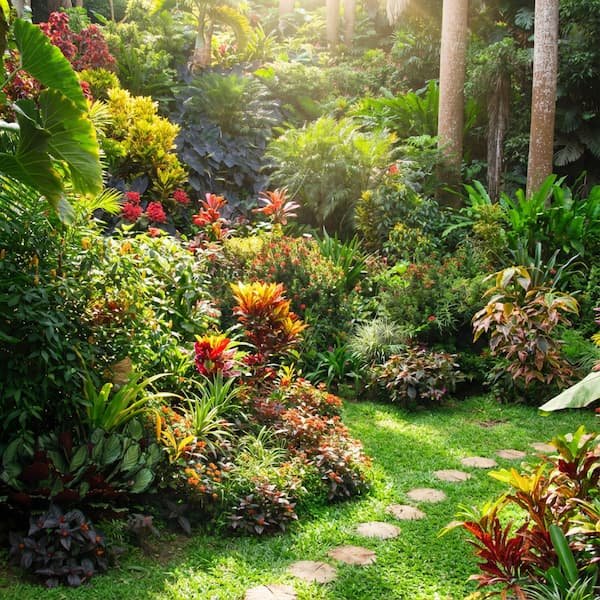
Hunte’s Gardens: A Geological Marvel
Located in the heart of St. Joseph, Hunte’s Gardens is uniquely situated within a “collapsed cave,” a massive limestone sinkhole that has created a specialised micro-climate. This natural depression acts as a vertical sanctuary, shielding delicate tropical species from the harsh Atlantic salt spray that characterises the nearby coast. The high limestone walls function as a natural amphitheatre, retaining humidity and fostering a density of growth that includes towering palms and prehistoric-looking ferns.
Visitors navigate a series of winding stone paths that descend into the depths of the sinkhole, where the air temperature can feel significantly cooler than the surrounding hills. Anthony Hunte, the garden’s creator, often greets guests on his veranda with classical music playing softly through the canopy, enhancing the “enchanted forest” atmosphere. It is a site defined by its verticality; looking up from the garden floor provides a rare perspective of the Bajan jungle canopy against the bright Caribbean sky.
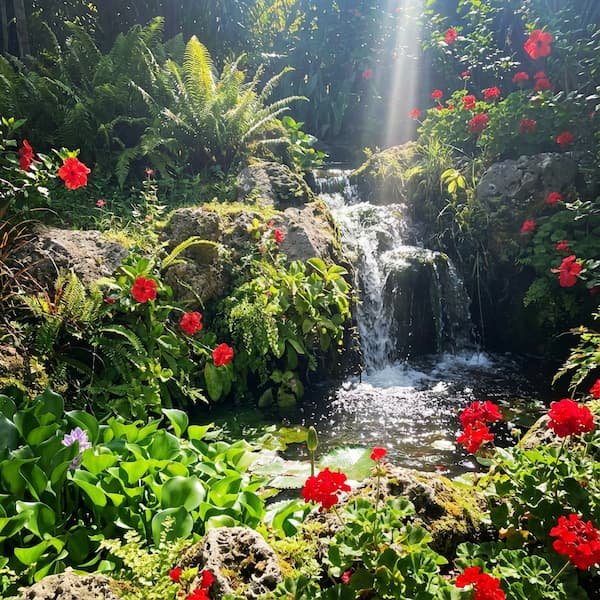
Andromeda Botanical Gardens
Just a two-minute drive from the Soup Bowls, Andromeda Botanical Gardens represents the historic heart of Bajan horticulture. Founded in 1954 by Iris Bannochie, it began as a private passion project on a cliffside overlooking the Atlantic. Its international significance was cemented when it became the first Caribbean institution affiliated with the Royal Horticultural Society (RHS). The garden is a living laboratory of how diverse tropical species adapt to the relentless coastal winds of the Scotland District.
Unlike the sheltered depths of Hunte’s, Andromeda offers a more rugged and sprawling botanical experience. The 8-acre site features a massive Bearded Fig Tree—the species that gave Barbados its name—alongside a world-class collection of succulents and palms. The paths here offer glimpses of the ocean between the foliage, serving as a constant reminder of the garden’s precarious and beautiful position on the edge of the island’s most turbulent coast.
Exploring the Historic Scotland District
To understand the St. Joseph parish, one must look toward the Cotton Tower Signal Station. Standing approximately 1,000 feet above sea level, this 19th-century tower was part of a communication chain used to signal the arrival of ships or the outbreak of fires. From its vantage point, you gain a 360-degree view of the Scotland District. This is the only location on the island where you can clearly see the folded and faulted sedimentary rocks that comprise the island’s basement, a stark contrast to the flat limestone capping found elsewhere. The view clarifies why navigating the east coast requires such careful driving; the terrain is a series of sharp ridges and deep valleys.
A short distance away lies the historic St. Joseph Parish Church. The 1839 structure, now a picturesque ruin due to land instability in the Scotland District, is a testament to Bajan resilience, having been erected to replace the 1640 original that was completely levelled by the Great Hurricane of 1831. Walking through the graveyard, visitors can find some of the oldest legible headstones on the island. These markers recount the lives of early East Coast planters and maritime workers, offering a silent history of the families who survived the isolation of the windward coast long before modern roads connected it to Bridgetown.
The Culinary Traditions of the East
The culinary landscape in St. Joseph is anchored by the “West Indian Buffet,” a legendary tradition held every Sunday and Wednesday at the Atlantis Historic Inn. This is not a standard hotel meal; it is a vital cultural event. The buffet features strictly traditional Bajan dishes such as pepperpot—a rich, dark meat stew flavoured with cassareep—and pickled breadfruit. For surfers returning from a morning session at the Soup Bowls, this meal serves as a necessary “recovery” tradition, providing a caloric foundation for an afternoon of further exploration.
For a more casual experience, the local rum shops scattered along the coastal road provide a window into authentic Bajan life. Unlike the polished tourist bars on the south coast, these establishments are where locals gather to discuss the day’s catch or the swell height. It is here that you can truly appreciate the St. Joseph dining scene, where the focus remains on fresh seafood, particularly flying fish, and the communal atmosphere of the parish. The salt air and the sound of the Atlantic crashing against the shore are the only background music you need.
Hidden Wonders: Cole’s Cave & The Chase Vault
For those willing to venture off the beaten path, Cole’s Cave offers a raw geological experience. Unlike the commercially developed Harrison’s Cave, access to Cole’s requires a guide and a willingness to get dirty. The entrance is a “keyhole” opening that leads into a massive cathedral-like cavern. Inside, an active underground river flows toward the sea, and visitors often find themselves wading through waist-deep water in sections of the cave. The hydrology here is fascinating; the water is part of the island’s natural filtration system, carving through the limestone over millennia.
The cave is also a biological hotspot, home to a colony of endemic bats and unique cave-dwelling crickets that have adapted to the total darkness. The stalactites and stalagmites remain active, dripping with calcium-rich water that continues to shape the cavern today. The entrance itself is a sinkhole oasis, where giant mahogany trees and ferns grow significantly taller than their counterparts in the forest as they compete for the light filtering down from the surface.
On the way back toward the south, many travellers stop at the Chase Vault in the Christ Church Parish Church cemetery. This site is famous for one of the Caribbean’s most enduring mysteries. Between 1812 and 1820, heavy lead coffins inside the sealed vault were repeatedly found scattered and standing upright every time the vault was opened for a new burial. In 1819, Governor Lord Combermere personally supervised the sealing of the vault and placed sand on the floor to catch any footprints. When it was reopened a year later, the coffins had moved again, yet the sand remained undisturbed. Today, the vault sits empty and open to the public, a chilling historical curiosity overlooking the town of Oistins.
Coastal Life and the Old Railway Path
Before the advent of modern highways, the “Train to Bathsheba” was the primary link to the east. Operating from 1881 to 1937, the Barbados Railway navigated the treacherous coastal slopes of the Scotland District. Today, the walking trail connecting Bathsheba to Cattlewash follows this exact historic line. Walking this path allows you to see the landscape as the 19th-century travellers did, moving at a pace that highlights the geological transition from the massive Mushroom Rocks to the stilted houses of Cattlewash.
Cattlewash itself holds a unique place in Bajan culture. Historically, it served as the primary “summer retreat” for wealthy families from Bridgetown who sought the “fresh air” of the Atlantic to cure respiratory ailments. This “staycation” heritage is still visible in the architecture of the area; houses are built on tall concrete stilts to allow the sea breeze to circulate underneath and to protect the structures from the occasional high-energy storm surge. It is a quiet, residential stretch that contrasts with the more active surf-centric vibe of the Soup Bowls experience.
Seamlessly Connecting Your Visit
Navigating between the beach and the gardens is most efficient by rental car, though the Route 6 bus from Bridgetown serves Bathsheba for a flat fare of $3.50 BBD. The winding hills of the Scotland District offer some of the most scenic driving on the island. The roads are narrow and require a slower pace, which is ideal for spotting the green monkeys that frequent the Flower Forest and Hunte’s Gardens. If you are driving, ensure you check the safety and logistics guide for tips on local road etiquette and parking at Bathsheba Park.
Local Tip: Start your morning at Bathsheba at roughly 7:30 am to see the surfers at the Soup Bowls when the light is best for photography, then retreat to the shaded depths of Hunte’s Gardens during the midday heat between 11:30 am and 2:00 pm.

A Good Bajan Day – Bestselling Barbados Highlights Tour
⭐ Professional local guide included